

The history of the Civil Rights movement in Omaha is often defined by the high-profile activism of the 1960s, including 4CL and the Black Panthers. However, the foundation of organized resistance were laid decades earlier by youth who refused to accept the limitations of Jim Crow Nebraska. One youth-led project empowered African American students to investigate and document the daily indignities of systemic racism in Omaha. This is a history of the Tomorrow’s World Club.
Where It Came From

In the early 1940s, North Omaha was dense hub of Black community, bound by redlining and social entrenchment. While the nation prepared for World War II, young Black Omahans faced a local paradox: they were expected to support a global fight for freedom while being denied employment at the grocery stores and offices in their own neighborhoods. In 1940, the Tomorrow’s World Club was formed at Tech High to bridge this gap, using direct investigation to challenge the “separate but equal” myths of the era. Through the years, they also acted like a social club for African American youth.
The 1944 Business Survey
In 1944, the club’s members, led by Dorothy Eure (1927-1993) and Jack West, Sr. (1926-1992), conducted a groundbreaking informal survey of Omaha’s commercial sector. Members visited businesses throughout the city to inquire about job openings and hiring policies. According to an interview late in her life, Ms. Eure said she and her fellow activists refused to settle for what their elders did, and “We weren’t going to live under the segregated conditions they had lived under.”
Their findings provided the first raw data on economic exclusion in the city. Many business owners were unapologetically blunt, responding to the youth with variations of the phrase, “We don’t hire Negroes.” This survey transformed personal experiences of rejection into a collective body of evidence that older community leaders, such as advisors Art McCaw (1905-1985) and Leota Jones, could use to pressure the municipal government.
The 1945 School Board Campaign

By 1945, the club turned its focus toward the Omaha School Board. At the time, the board maintained a policy that restricted Black faculty to a handful of elementary schools in the Near North Side, such as Lake, Howard Kennedy, and Long. There were virtually no Black teachers in Omaha’s high schools.
The Tomorrow’s World Club launched a campaign to force the hiring of Black secondary educators. They argued that the lack of representation at the high school level discouraged Black students from pursuing professional careers. Although the board’s resistance was deep—it would be 1959 before a Black teacher was hired at a junior high and 1963 for a high school—the club’s 1945 pressure was the precursor to the massive desegregation battles of the 1960s and 70s.
Linking to the Future: Legacies of Leadership
The Tomorrow’s World Club served as a critical training ground for individuals who would define Omaha’s Post-Civil Rights era:
- Dorothy Eure: Her early activism led directly to her becoming a founder of the Citizens Coordinating Committee for Civil Liberties (4CL) in 1963, where she organized marches on city hall to demand open housing and job equity. In 1969, she founded the Afro-Academy of Dramatic Arts, using theater to preserve Black history and mentor a new generation of activists.
- Jack West, Sr.: Remained a pillar of North Omaha, his early surveying work influencing the tactical approach of later groups like the NAACP Youth Council.
- Art B. McCaw: His mentorship of the youth in the 1940s preceded his historic 1952 appointment as the first Black cabinet-level official in a Nebraska governor’s office, where he served as state budget director.
- The Next Generation: Dorothy’s sons, Harry and Darryl Eure, inherited their mother’s activist spirit. In 1969, Darryl led a sit-in at the UNO president’s office as part of Black Liberators for Action on Campus (BLAC), which successfully demanded the creation of a Black Studies program.
The Tomorrow’s World Club demonstrates that the roots of the Black Power and equity movements in Omaha were planted by youth who, in the face of blunt rejection in 1944, chose to document the truth and fight for a different tomorrow.
You Might Like…
MY ARTICLES ABOUT CIVIL RIGHTS IN OMAHA
General: History of Racism | Timeline of Racism
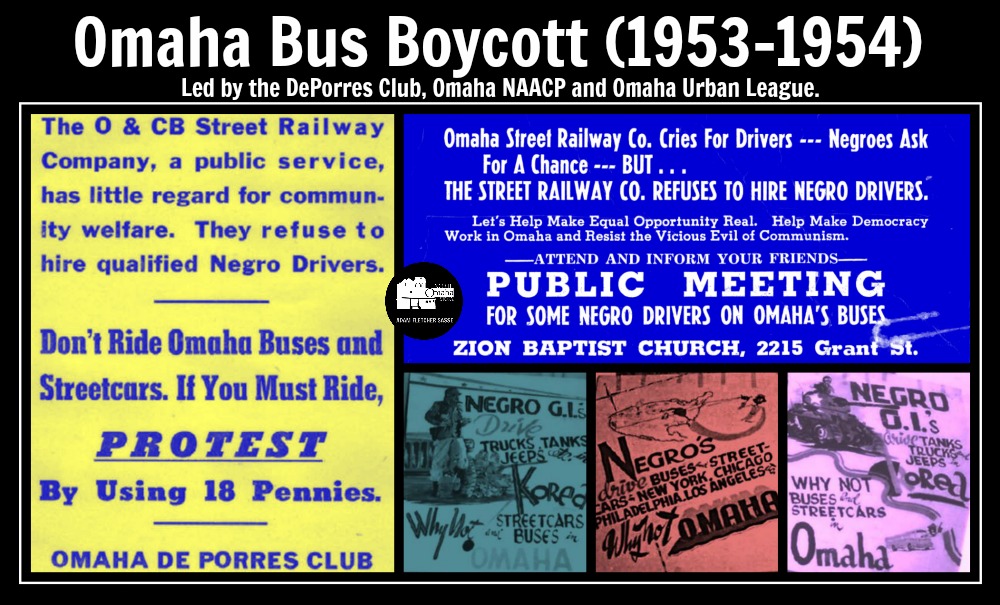
Events: Juneteenth | Malcolm X Day | Congress of White and Colored Americans | George Smith Lynching | Will Brown Lynching | North Omaha Riots | Vivian Strong Murder | Jack Johnson Riot | Omaha Bus Boycott (1952-1954)
Issues: African American Firsts in Omaha | Police Brutality | North Omaha African American Legislators | North Omaha Community Leaders | Segregated Schools | Segregated Hospitals | Segregated Hotels | Segregated Sports | Segregated Businesses | Segregated Churches | Redlining | African American Police | African American Firefighters | Lead Poisoning
People: Rev. Dr. John Albert Williams | Edwin Overall | Harrison J. Pinkett | Vic Walker | Joseph Carr | Rev. Russel Taylor | Dr. Craig Morris | Mildred Brown | Dr. John Singleton | Ernie Chambers | Malcolm X | Dr. Wesley Jones | S. E. Gilbert | Fred Conley |
Organizations: Omaha Colored Commercial Club | Omaha NAACP | Omaha Urban League | 4CL (Citizens Coordinating Committee for Civil Rights) | DePorres Club | Omaha Black Panthers | City Interracial Committee | Providence Hospital | American Legion | Elks Club | Prince Hall Masons | BANTU | Tomorrow’s World Club |
Related: Black History | African American Firsts | A Time for Burning | Omaha KKK | Committee of 5,000
Elsewhere Online
- “Dorothy Eure – Invisible History 2015,” Omaha Public Schools Making Invisible History Visible
- “Dorothy Eure and Lerlean Johnson” Great Plains Black History Museum.
- “Interview with Dorothy Eure, July 28, 1982,” University of Nebraksa archives.
- “Black Legacy Families, Installment III: The Eures Making Arts and Activism the Family Business,” Leo Adam Biga (2021) NOISE.
Leave a Reply