
In the early 20th century, African American leaders in Omaha were anointed and conferred by systems, whether they were cultural, religious, political or economic. You didn’t just say “I’m a leader” and suddenly you were important. Sometimes, people would cross boundaries and barriers to secure support from the Black community and beyond. This is a biography of John Grant Pegg, one of these leaders.
From South Carolina and Kansas to Nebraska

In just under 20 years, John Grant Pegg (1868-1916) arrived in Omaha, ingratiated himself within the well-established Black community, and had prominent roles among the city’s African Americans and beyond. A Republican, he quickly became important throughout the city.
Pegg was born either in South Carolina or in Richmond, Virginia, in the years after the Civil War. His father and mother, Polly Pegg (1847-1917), moved the family to Dunlap, Kansas, where he grew up with his siblings James, Henry, Charles, Bayliss, and Ida. After graduating from the Freeman’s Academy in Dunlap, the young Pegg went to work for the Santa Fe Railroad as a porter. He became the leader in the African-American Republican Club of Dunlap, in 1888.
Eventually working out of Chicago, he met a seamstress named Mary Charlotte Page (1871-1956) there. While there , Pegg became active in the Black political movement in the city and associated with attorney and politician Edward Morris (1858-1943) and white abolitionist and activist Clarence Darrow (1857-1938), among others. These men were leaders in Civil Rights campaigns of that era and influential among the liberals who filled the Republican Party then.
After they were married, Pegg and his wife moved to Omaha in 1899. Quickly joining St. John’s AME Church, the couple had five children, Mary, James, John, Ruth, and Gaitha. John joined Omaha’s Prince Hall Masons and became a leader of the Knights of Tabor.
Rising in Omaha

Reflecting his learning in Chicago, almost immediately Pegg became involved in Omaha politics. Alomst as soon as he arrived in 1899, Pegg was noted in the newspaper for traveling and speaking at Republican Party events. After Teddy Roosevelt became president in 1901, his campaign team started seeding support groups across the nation. Pegg was a founder and became the leader of the Colored Men’s Roosevelt Club in Omaha, pushing for the community to support Roosevelt’s reelection in 1904. Contrary to many of that era’s Black leaders in the city, in 1902 he worked with Thomas P. Mahammitt and to organize community opposition to the reelection of Congressman David Henry Mercer (1857-1919) in favor of businessman E. J. Cornish.
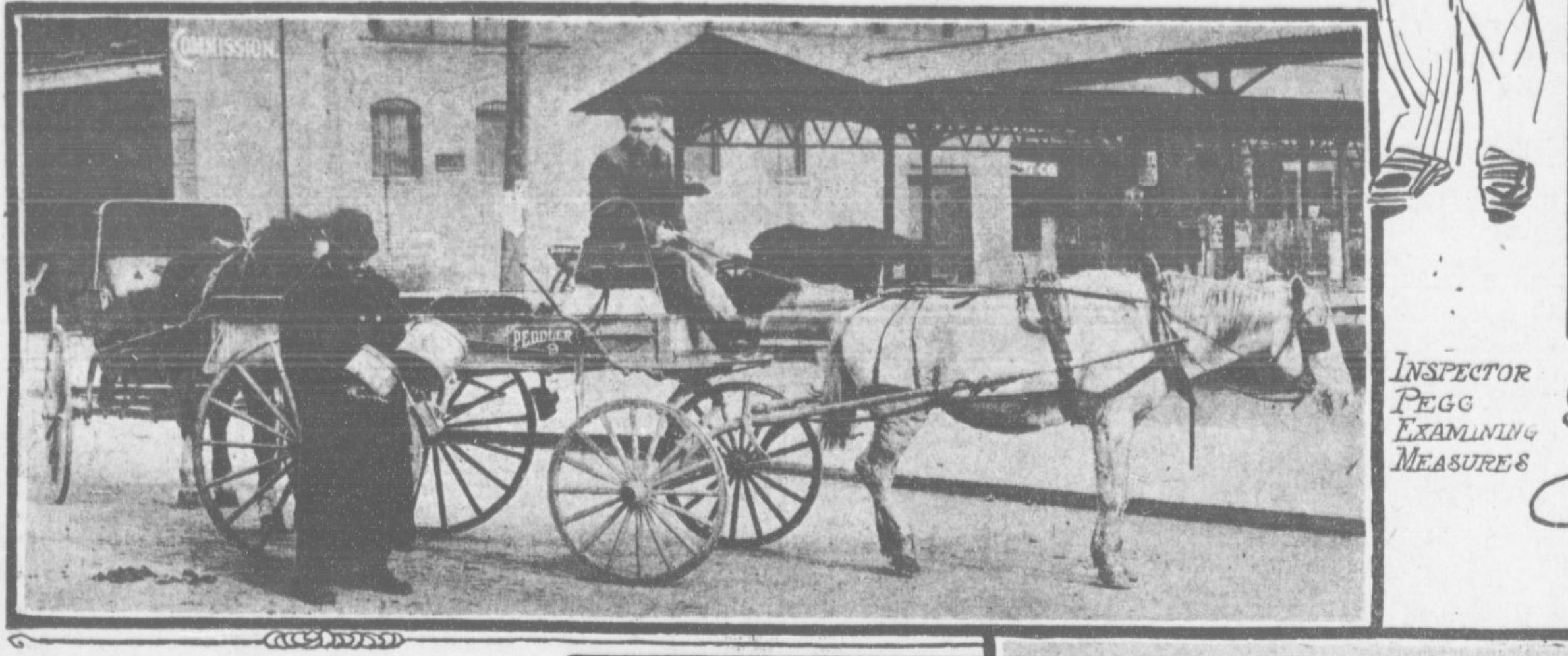
First a janitor at the mayor’s office, Pegg’s involvement in party politics was rewarded and in 1901 Republican mayor Moores (1841-1906) hired Grant as his personal messenger. Moore’s Democratic successor, “Cowboy” Jim Dahlman (1856-1930) appointed Grant as the City of Omaha Inspector of Weights and Measures. Black men had been hired into that position since 1890, and this was a continuation of that practice.
Increasingly seen as a community-wide leader, in 1907 Pegg became president of a local branch of the People’s Mutual Interest Club, and was elected as chairman of the executive committee of the national People’s Mutual Interest Club late 1907. He was also a member of the Lincoln Club.
In 1908, Pegg was elected president of the Interstate Literary Association and nominated to go to Kansas City for their annual convention. In 1911, he sponsored a group of African American settlers who homesteaded around DeWitty, Nebraska. A few years later, Pegg became a chairman of Omaha’s Negro Woman’s Christian Association and led their campaign to open the Negro Old Folks Home in 1913 in the Long School neighborhood.
Pegg went to the National Negro Business League convention in 1909 as a representative of Omaha’s Black businesspeople. When he got back, Pegg helped establish the Omaha Negro Business League to encourage business development and “stimulate race pride.” Although never associated with business ownership in Omaha, Pegg was intimately familiar with their operations, benefits and realities through his City position.
Throughout his life in Omaha, Pegg regularly spoke at gatherings of the Black community. His speaking appearances happened from 1902 until he died, and included Emancipation Day celebrations, political events, community gatherings and more. At these events and others, he was often associated with Rev. Williams, Dr. Matthew Ricketts, attorney Harrison J. Pinkett, and other notable leaders from the era. During this time he became regarded informally as Omaha’s “Black councilman” because of his political influence with white politicians.
Building Political Power

Pegg was a page and doorkeeper at the 1908 Republican National Convention in Chicago. When Black captains were demoted as a group by the Omaha Fire Department in 1911, Pegg joined with Rev. John Albert Williams and Vic Walker to protest the move and attempt to have them reinstated.
In 1911, a Jim Crow bill was introduced by in the Nebraska Legislature by a western Nebraska representative. Pegg stood up against it, and the bill died in committee after he and ten Omaha Black leaders spoke against it in the legislature. In 1916, Pegg was elected chairman of the Western States Negro Republican Convention held in Kansas City.
In July 1916, he was walking down the street in downtown on a hot day when he suddenly collapsed from heat exhaustion. A few weeks later he died. His funeral was held at St. John’s AME Church, and he is buried at Forest Lawn Cemetery.
Today, more than a century after he died, celebrations of the life of this African American leader in the city do not happen. There are no schools, streets or parks in Omaha named in memory of the service and accomplishments of John Grant Pegg. There is no award in his name or activity to celebrate his life. Maybe that will change someday.
You Might Like…
- People from North Omaha History
- A History of African American Politics in North Omaha
- A History of Community Leaders in North Omaha
Sources
- “John Grant Pegg” by K. Matin on January 1, 1982 posted on BlackPast.org
- “John Grant Pegg” by Joyceann Gray on J. Gray Research
- “John Grant Pegg” on Findagrave.com
- “Mary Charlotte Pegg” on Findagrave.com
- “John Grant Pegg” on Wikipedia
BONUS




Leave a Reply